
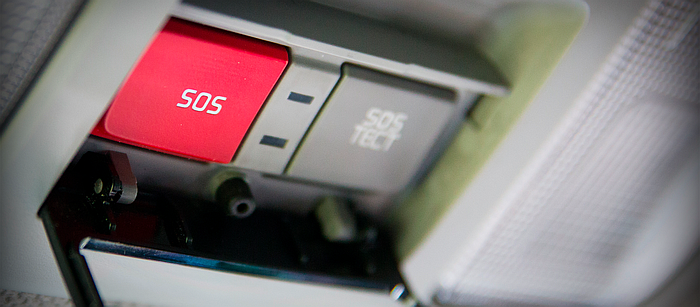
- Hyundai Mobis has chosen an Anritsu testing solution to verify its Hybrid eCall system, designed to ensure interoperability between the eCall (Emergency Call) and NG-eCall emergency call systems.
- As a reminder, eCall is a public service-based automatic emergency call system that allows a vehicle involved in an accident to instantly call emergency services via a mobile phone network and send its precise location.
Author: Tomohide Yamazaki of Anritsu Corporation
The automotive industry is transitioning from the conventional eCall emergency call system operating on 2G and 3G networks, where vehicles automatically contact emergency services in the event of an accident, to the next-generation (NG) eCall system using 4G networks. Since 2G/3G networks remain in service, Hybrid eCall plays a critical role in ensuring seamless interoperability between eCall and NG‑eCall systems.
Hyundai Mobis has actively adopted Hybrid eCall and has overcome significant challenges, including acquiring test equipment, mastering the advanced 4G and 5G mobile protocols required for call initiation, and addressing limitations of network simulation environments in the early stages of development.
Anritsu’s eCall Tester MX703330E and Signalling Tester MD8475B provided an effective solution to these challenges. By establishing a comprehensive test environment and utilizing automated conformance testing and log‑analysis functions, Hyundai Mobis promptly identified the root causes of operational issues.
Furthermore, sharing the test environment between development and verification teams further improved consistency, reliability, and operational efficiency.
Conformance testing in accordance with EU regulations and ETSI standards
Hyundai Mobis integrates Hybrid eCall functionality into its data connectivity unit (DCU). Conformance testing is conducted in accordance with EU regulations and ETSI standards to verify functionality across various network conditions and to ensure interoperability with Public Safety Answering Points (PSAPs).
In addition, Hyundai Mobis was required to design test scenarios, perform error analysis, prepare detailed test reports, and develop technical verification documents necessary for certification. These processes were supported by Anritsu’s simulation and functional testing capabilities.
There were two primary reasons why the company selected Anritsu’s test solution. First, it enables comprehensive Hybrid eCall testing with an all-in-one tester. Previously, separate testers were required to verify Hybrid eCall, NG eCall, and eCall. By integrating Anritsu’s software-based tester MX703330E with the hardware tester MD8475B, all three types of eCall functionality can be tested using a single solution. This integration reduced initial investment requirements and operational workload, improving overall verification efficiency.
The second reason was enhanced collaboration and efficiency using the same test environment as the development team. This alignment facilitated accurate issue reproduction and streamlined root‑cause analysis. Additionally, Anritsu’s clear setup documentation contributed to more efficient software updates and debugging activities.
Appropriate technical support
With Anritsu’s technical support, Hyundai Mobis’s teams gained early access to its MX703330E, MD8475B, and beta firmware versions. This enabled the teams to verify Hybrid eCall‑related software updates prior to official release and to perform conformance testing during the development stage.
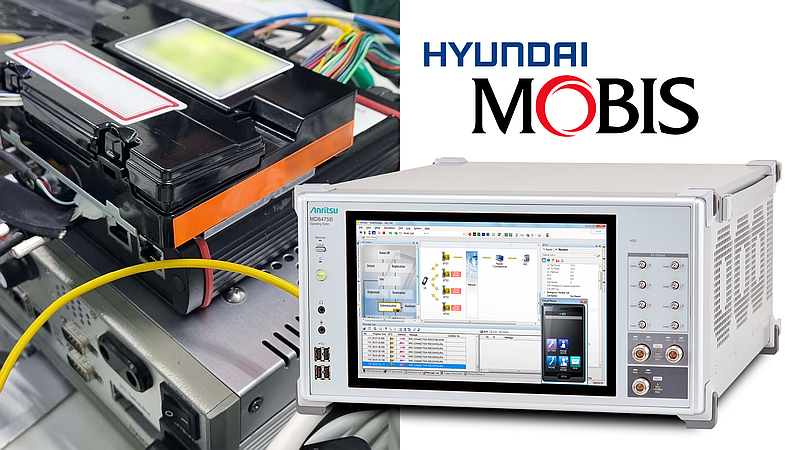
Anritsu’s test solution also contributed to building expertise in 4G and 5G mobile communications and Session Initiation Protocol (SIP) signalling. Analysing the operation of the SIP protocol using the sequence log feature provided a practical understanding.
Furthermore, the setup procedures were based on the provided manuals, and network simulations were repeatedly conducted with on-site support and phone consultations with Anritsu’s staff. With this support, the teams steadily acquired the knowledge of mobile communications required for eCall verification.
Simulation of various network conditions
The teams also needed to simulate various network conditions. Utilizing the handover and cell configuration features of the MX703330E and MD8475B, including signal strength control, ECL settings, and service controls, they were able to effectively reproduce real-world network conditions. This enabled prompt and effective software verification by the teams.
Since implementing Anritsu’s test solution, the compatibility between the DCU and the test environment has remained consistently high. The teams experienced no notable issues when integrating the product with existing hardware. The test environment was configured efficiently, and stable operation was achieved from the initial stage of deployment.
Hyundai Mobis has been able to conduct reliable, repeated testing in the laboratory, building a normal testing environment. They have also automated conformance testing and network simulations. Test scenarios were created using Anritsu’s SmartStudio Manager (SSM) MX847503A, which supports the generation of rapid and reliable test results, therefore contributing to improved development efficiency and product quality.
When issues occur, reviewing the sequence and message logs of the tester allows the immediate determination of whether the issue is due to device settings or the hardware itself. This capability allows the verification team to provide accurate and timely feedback to the development team, reducing the time required for root cause analysis and problem resolution.
Support from the program’s installation phase
During the implementation process, Anritsu supported the teams from the programme installation stage, which allowed teams to establish the test environment smoothly. One unexpected issue was that the USIM card initially provided for the device was not compatible with performing the test eCalls required for functionality verification. Anritsu promptly provided a compatible USIM card, allowing the verification activities to continue without interruption. No additional compatibility issues were observed with the existing DCU verification setup.
Another episode was the provision of a reporting tool, including testers’ logs. The initial conformance test reports could not be presented as objective evidence to certification bodies and relevant departments, necessitating further improvements. When the team asked Anritsu to enhance the reports, they listened carefully and updated the reporting tool to create highly reliable reports that included logs from the MX703330E. As a result, verification results could be presented more clearly and convincingly. This was a huge benefit.
The greatest appeal of Anritsu’s tester lies in its reliability and stability. Anritsu’s products, including the MD8475B, are widely recognised for their long-standing use in multiple fields and their industry-leading stability. In Hyundai Mobis’ verification processes, the reliability allowed teams to focus on analysing hardware issues.
The teams acquired the skills to operate the tester through on-site support, telephone and email communication, as well as by using the manuals provided by Anritsu’s representatives. Thanks to this comprehensive support, they were particularly impressed by Anritsu’s prompt and accurate technical support throughout the setup and operation of the test environment.
Future projects
Looking ahead, Hyundai Mobis plans to expand automation within its verification processes where feasible. Anritsu’s technical support will provide guidance based on its expertise in automation technologies.
Beyond the eCall functions, the Anritsu test solution supports verification capabilities, including SMS transmission and throughput measurement. While the details of these functions are still being finalised, Hyundai Mobis is eager to consider using them proactively to increase the value of the equipment. In doing so, Hyundai Mobis aims to broaden the scope of verification, enable a more multifaceted analysis of product performance, and ultimately contribute to the development of even higher-quality products.