- The Indy Autonomous Challenge (IAC) and Dspace have introduced a mandatory virtual qualification process for autonomous racing teams.
- Before driving their race cars on the Laguna Seca circuit on September 3, teams were required to validate their autonomous driving systems within a simulation environment.
The qualification process utilized Dspace’s Software-in-the-Loop (SIL) toolchain. This integrates the Veos simulation platform, the ASM vehicle and environment models, and the Aurelion sensor simulation software.
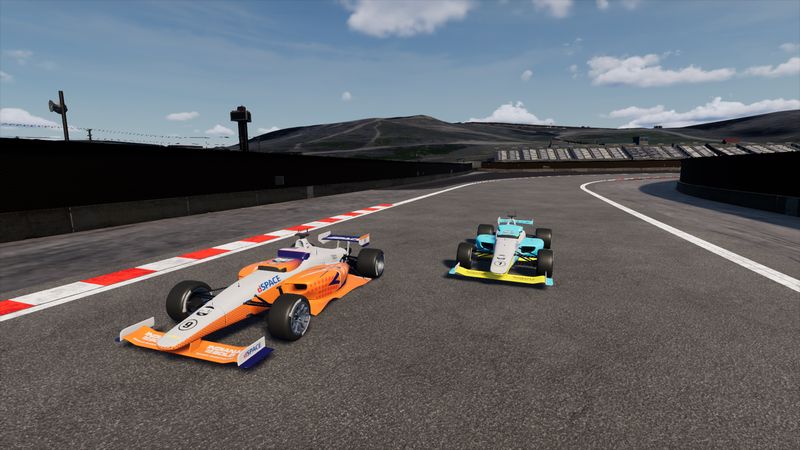
Together, these tools created a digital twin of the Laguna Seca circuit, featuring its elevation changes, blind corners, and varying terrain. The goal was to test trajectory planning, vehicle control, and decision-making algorithms in a virtual environment to minimize the risk of physical damage on the track.
Scenario Execution and Validation
- Testing infrastructure: Dspace Veos platform, ASM models, and Aurelion software.
- Testing volume: Over 500 autonomous overtaking maneuvers validated virtually.
- Result: All participating teams qualified for the physical event.
Test Scenarios and Racing Rules
The qualification phase required virtual vehicles to successfully execute basic safety protocols, such as detecting race flags, performing automatic returns to the pits, and managing telemetry stream interruptions.
The algorithms were also subjected to dynamic multi-vehicle configurations. Scenarios included overtaking maneuvers, defensive driving, and direct interactions between competitors. All participating teams successfully completed this preliminary stage.